
Workshop
The Leadership Spark
Shift the Thinking. Start the Change.
That moment in a workshop or retreat — you hear something, it clicks, and you turn to a colleague and say, “We should try this.”
Sometimes that’s all it takes. One idea.
One conversation that changes how a leader sees their role — and starts the change.
What’s Included
Investment $850* USD
(Available online / In person).
*Not including travel fees, if in person
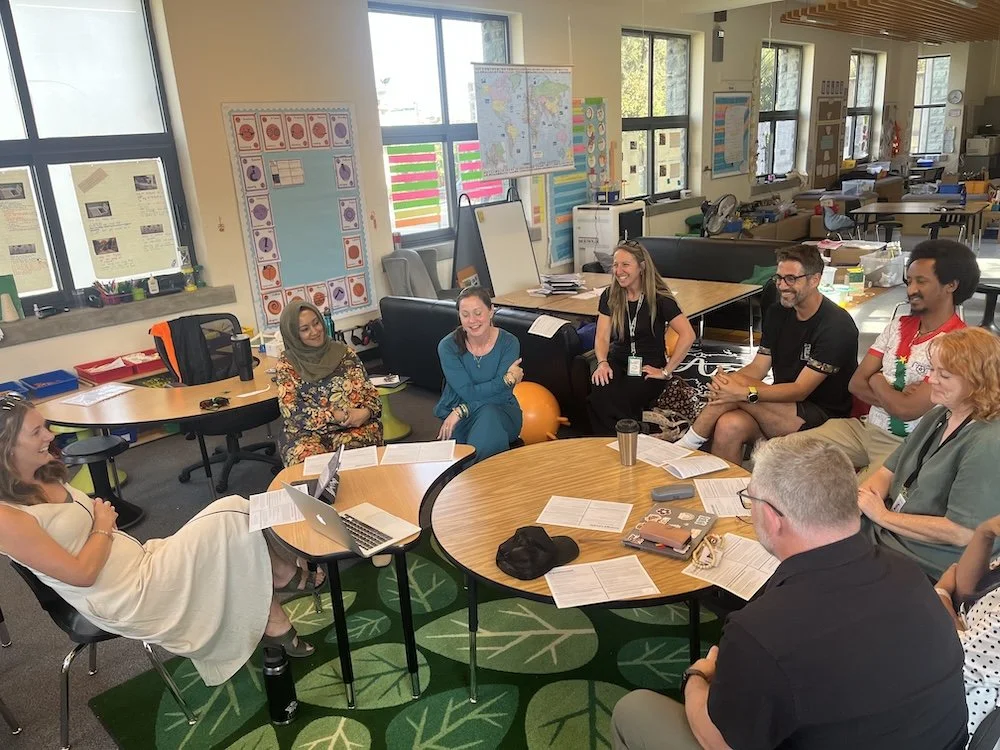
A high-impact workshop that introduces coaching-based leadership tools leaders can use immediately
-
Deputy Principals
Curriculum Coordinators
Counsellors
Team Leaders
Instructional/Learning Coaches
-
Understanding your energy and how it influences your leadership
Asking better questions vs telling
Leading with curiosity instead of control
Creating more reflective teams
-
Leaders leave with practical tools they can use immediately to shift their own energy, and the energy of their team.
You feel the difference in the room the very next day.
Workshop Review
What Jose says about the leadership workshop
How it works
It happens in stages — each one building on the last.
Client stories
What it’s like to work together
-
![Picture of Megan Eddington]()
Megan Eddington
Director of Teaching and Learning, Tazmania
"Working with Ellie was an absolute joy. I was stepping into a new leadership role, and her calm, inquiring presence helped me navigate the whirlwind of thoughts and emotions that came with it. Her coaching approach consistently brought achievable, actionable solutions to the challenges I was facing.” -
![Picture of Addriene Garcia]()
Addriene Garcia
Teacher and Team Leader
“I was impressed how Ellie's coaching could me see where my actions did not align with my goals and values. One step further, she helped me clarify my goals and values so that I could see where this occurred in my own thinking and actions.”
-
![Picture of Amanda Davies]()
Amanda Davies
Coach for Lawyers, Dubai
“What makes Ellie an extraordinary coach is her ability to not only address surface-level concerns, but to gently uncover deeper, underlying issues and patterns I hadn't even recognized. She helps me get to the true heart of what matters.”
-
![Picture of Shaun Copple]()
Shaun Copple
Entrepreneur, Czech Republic
“Working with Ellie has been a true transformation over the last year. Ellie helped me to understand what was holding me back in taking action.”
-
![Picture of Tesni Hughes]()
Tesni Hughes
Entrepreneur, UK
“Ellie has a unique ability to make you feel instantly at ease, as if you've known her for a lifetime. This sense of comfort creates an environment of trust and transparency, allowing you to open up and truly explore what’s holding you back.”



FAQs
-
Coaching is a partnership designed to help people think more clearly, take purposeful action, and move toward the goals that matter most to them. Rather than telling someone what to do, a coach helps uncover new perspectives, identify obstacles, and create practical steps forward.
The International Coaching Federation describes coaching as partnering with clients in a thought-provoking and creative process that inspires them to maximize their personal and professional potential.
Many clients come to coaching with insights they’ve already gained from conferences, professional development, or consultants. Coaching helps turn those ideas into action. Instead of collecting more information, clients begin implementing what they’ve learned in ways that work in their real-world context.
-
These roles can overlap, but they serve different purposes.
Coaching focuses on helping someone discover their own answers. A coach asks questions, listens deeply, and helps the client create solutions that fit their goals and circumstances.
Mentoring usually involves guidance from someone who has been in a similar role or career path. A mentor may share experiences, advice, and lessons learned.
Consulting typically involves an expert who analyzes a situation and recommends specific solutions or strategies.
Ellie’s coaching style sits primarily in the coaching space, but she also draws from current leadership research and professional learning when it’s helpful. She stays up-to-date on leadership development and educational leadership resources, and she shares those tools with clients when appropriate.
The key difference is how they’re used. Ellie doesn’t push resources onto clients. Instead, she shares them when they might be useful, and then partners with the client to explore how those ideas could be implemented in their specific environment.
Many of Ellie’s clients have attended leadership conferences or worked with consultants before. Coaching becomes the space where those ideas are translated into everyday practice.
-
Ellie brings both professional coaching training and real leadership experience in education.
She understands what it feels like to sit in middle leadership - the space where leaders are often advocating for their programs, navigating competing priorities, and trying to influence change without always having full authority.
That experience helps her understand the challenges many education leaders face.
Alongside her background in education, Ellie holds a professional coaching certification and uses evidence-based coaching tools to support her clients.
She approaches coaching with the belief that every client already brings valuable insight and experience to the table. Her role is to help uncover that perspective, strengthen it, and use it to develop practical leadership strategies that align with the client’s values and goals.
-
At the start of the coaching partnership, Ellie and the client establish clear goals and define what success will look like.
These goals might relate to leadership growth, decision-making, team dynamics, or implementing new initiatives. Together, they also identify measurable indicators of progress.
Throughout the coaching process, they regularly check in on those goals and reflect on:
what’s working well
what’s changing
what new strategies might be helpful
This ongoing reflection helps ensure the coaching stays focused, practical, and aligned with what the client wants to achieve.
-
Each session begins with a brief check-in and a chance to celebrate any wins or progress since the previous conversation.
From there, the client chooses the topic they want to focus on. Together, Ellie and the client clarify the goal for that session and identify what the client would like to walk away with.
During the conversation, Ellie:
listens deeply
asks thoughtful questions
helps explore different perspectives
supports the client in developing practical next steps
The conversation stays focused on what the client can influence or control, helping them leave with clear takeaways they can try between sessions.
When relevant, they may also reference insights from the Energy Leadership Index (ELI) assessment to deepen self-awareness and explore new ways of responding to challenges.
-
Many strengths assessments focus on identifying personality traits or natural abilities.
The Energy Leadership Index (ELI) looks at something different — how someone perceives and responds to situations, especially under stress.
The ELI measures a person’s energetic profile and how they typically react when facing challenges. It examines patterns in thinking, emotional reactions, and behavior that influence how someone shows up as a leader and decision-maker.
The assessment highlights two key areas:
a person’s typical energetic profile on a normal day
their energetic stress reaction when challenges arise
By understanding these patterns, clients can become more aware of the internal filters that shape their reactions and decision-making. That awareness opens the door to more intentional responses, improved leadership presence, and greater resilience.
-
It’s a surprisingly common question.
In many situations, the dynamic between two people creates a particular type of energy. For example, when someone approaches a conversation with tension or conflict, the other person often responds with defensiveness.
One of the most powerful insights in coaching is realizing that while we can’t control someone else’s behavior, we can influence the dynamic by changing how we show up.
Sometimes even small shifts — tone, curiosity, perspective, or communication style, can change the way others respond.
Coaching focuses on the one thing every person can truly influence: their own actions, mindset, and approach. And often, when one person changes how they show up, the entire interaction begins to shift.
Ready to start or have another question?
Contact me or book a discovery call